UK Casino Facial Recognition: Your Rights and Alternatives
You can question a casino’s facial recognition request without trying to bypass identity checks. Learn what to ask about consent, alternatives and data use.
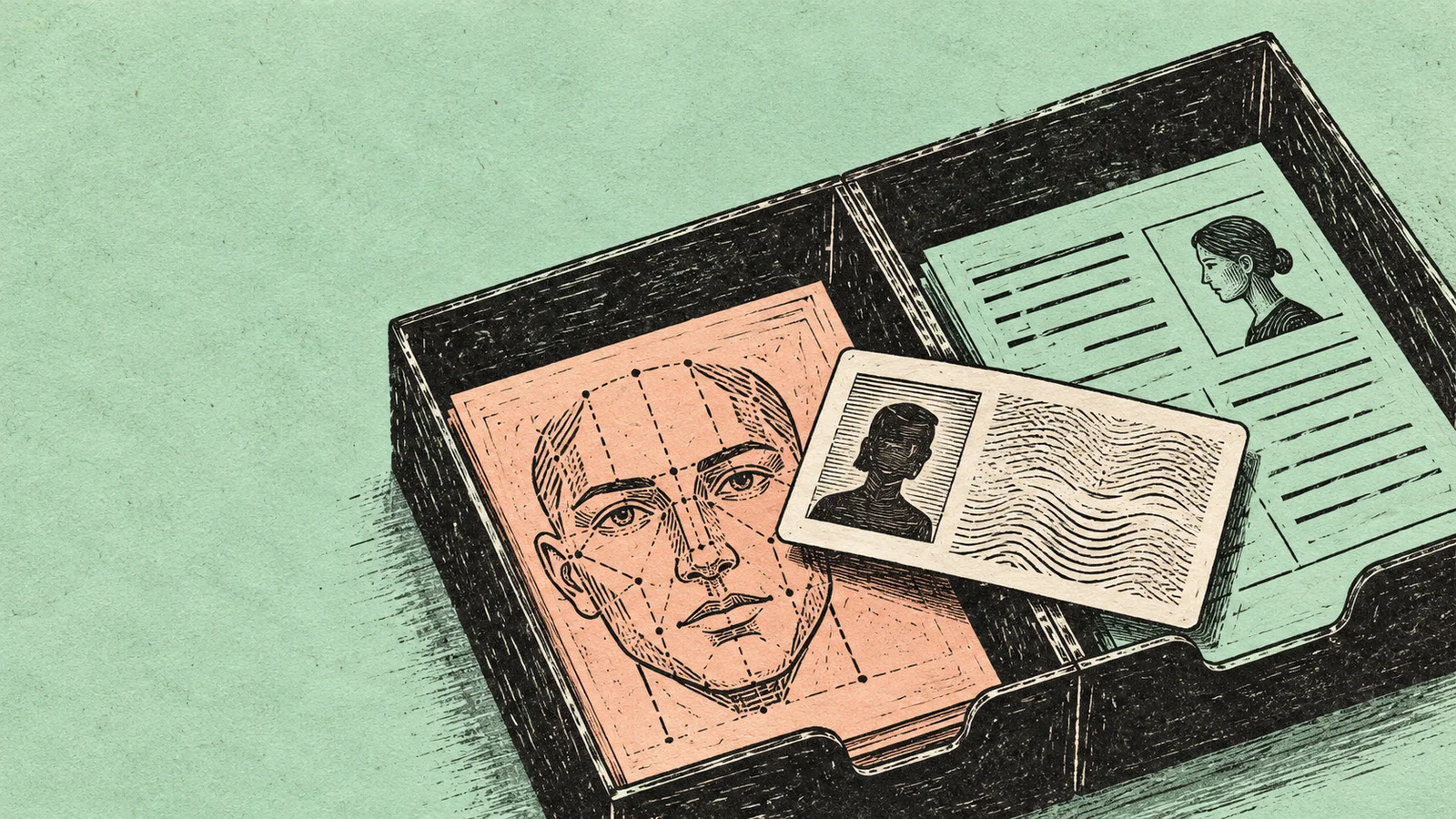
You can ask a casino for an identity check that does not use facial recognition. That is not the same as a right to gamble without proving who you are, or a guarantee that the operator must accept your preferred method. The useful question is whether it can verify your identity without the particular biometric processing you object to.
If your search was “avoid facial recognition casino verification uk”, focus on lawful alternatives, not bypassing checks. The Gambling Commission says online gambling businesses must verify age and identity before you gamble. Its guidance also says it does not prescribe which types of information businesses should request. Meanwhile, data protection rules place separate conditions on using biometric recognition.
This guide is for adults aged 18 and over. The Gambling Commission guidance discussed here concerns Great Britain; do not assume it describes every gambling rule across the UK.
Does casino identity verification require facial recognition?
The Gambling Commission’s age and ID guidance describes several ways a business may establish who you are. Companies can often match your details against existing records, such as credit-reference databases or the electoral roll. If that is insufficient, they may request identification documents, including a passport, driving licence or household bill.
An electronic check does not, by itself, mean that a system scans your face. Equally, a request for photographic evidence does not tell you exactly how the photograph will be processed. Ask whether a person will review it, software will compare it, or the service will create biometric information for recognising you.
The Commission’s identification and verification guidance for casinos distinguishes collecting your identifying details from checking them against reliable, independent evidence. It describes documentary and electronic methods, but it does not give customers an unrestricted choice between them. Where evidence is photographic, it also recommends comparing the customer with that evidence.
Why might a casino ask for a selfie?
A selfie request can be about whether the account is controlled by the person whose identity documents were supplied. The Commission gives suspected identity theft as an example: an account may have been created using someone’s details without that person controlling the gambling.
That explains why a photograph might be requested. It does not establish that every selfie request requires automated facial recognition, or that every use of biometric information is lawful. Ask the operator to explain the purpose and method separately.
What rights apply to biometric verification?
Facial recognition uses information about your facial characteristics to recognise you. When a biometric recognition system processes the specially protected biometric information discussed in the Information Commissioner’s Office guidance, the organisation needs two things: a lawful basis for processing personal information and a separate condition for processing special category data. “Special category” means information that receives additional protection under data protection law.
A duty to check identity does not, on its own, explain both requirements. An operator should be able to explain why its particular use of biometric recognition meets them.
The ICO page supplied for this guide states that it is under review following the Data (Use and Access) Act. Its guidance supports the distinctions below, but this article cannot determine the lawfulness of a particular casino’s system from a selfie prompt alone.
If the operator relies on explicit consent
The ICO says explicit consent is likely to be the most appropriate special category condition in many cases, although other conditions may apply. Consent must be specific and informed, and people must have genuine choice.
Where an organisation relies on consent, the guidance says it must offer a suitable alternative to people who do not consent. It must also allow refusal or easy withdrawal of consent without detriment. Explicit consent requires a clear statement of agreement; it cannot simply be inferred from someone’s behaviour.
The ICO illustrates this with a gym offering a PIN as an alternative to facial recognition for entry. That example explains meaningful choice. It does not prove that a casino can use a PIN to establish a new customer’s identity, or that a particular casino offers a non-biometric route.
If the operator relies on something other than consent
Refusing consent does not automatically settle the issue if another valid condition applies. The ICO says the correct basis and condition depend on the purpose and circumstances, and their requirements must be met.
For lawful bases other than consent, its guidance explains that biometric processing must be necessary and proportionate. Merely being useful, desirable or convenient is not enough. If a less intrusive approach could achieve the purpose, that matters to the necessity assessment.
Ask the casino to identify its basis and special category condition rather than assuming that either “you agreed to the terms” or “we have to check ID” fully answers the privacy question.
How to request a lawful non-biometric alternative
Start with a written request to the operator’s verification or privacy team. Make clear that you are willing to complete legitimate age and identity checks. This keeps your objection focused on the processing method, not on avoiding verification.
You could write:
I am willing to verify my age and identity, but I would prefer a method that does not use biometric facial recognition. Please confirm how the requested selfie will be processed, your lawful basis and special category condition where applicable, and whether you offer a suitable non-biometric alternative. Please also explain what happens to my account and any pending withdrawal while you consider this request.
Ask whether documentary review or a check against independent records could meet the requirement in your circumstances. These are methods described in Commission guidance, not promised alternatives at every operator. Even a manual document review may involve looking at a photograph, so clarify whether your concern is automated recognition, submitting a photograph, or both.
If the difficulty is an unreadable document or a mismatch in your details rather than biometric privacy, the separate guide to casino verification documents being rejected addresses that different problem.
Do not submit altered documents, somebody else’s photograph or misleading details. Those do not resolve a privacy objection and are not legitimate alternatives to verification.
What privacy risks should you ask about?
A consent box alone tells you little about how your information will be handled. Before submitting facial images, ask for a clear explanation of the following:
| Question to ask | What it helps you understand |
|---|---|
| Is the image reviewed manually or processed by recognition software? | Whether the request involves the biometric processing you are concerned about. |
| What information is created from the image? | Whether the service holds only the image or also information derived from your facial features. |
| Who processes it, including any external provider? | Which organisations handle the information. |
| How long is each type of information retained, and why? | Whether the stated purpose explains continued storage. |
| What happens if the system does not match me correctly? | Whether there is a route to resolve a disputed result. |
| What alternative is available if consent is the basis? | Whether refusing biometric processing is a genuine choice. |
These are questions to assess a service, not evidence that a particular operator has mishandled data. The ICO guidance highlights necessity, data minimisation and storage considerations, as well as the risks of systems wrongly accepting or rejecting someone. No supplied evidence establishes the error rate or security of an individual casino’s verification provider.
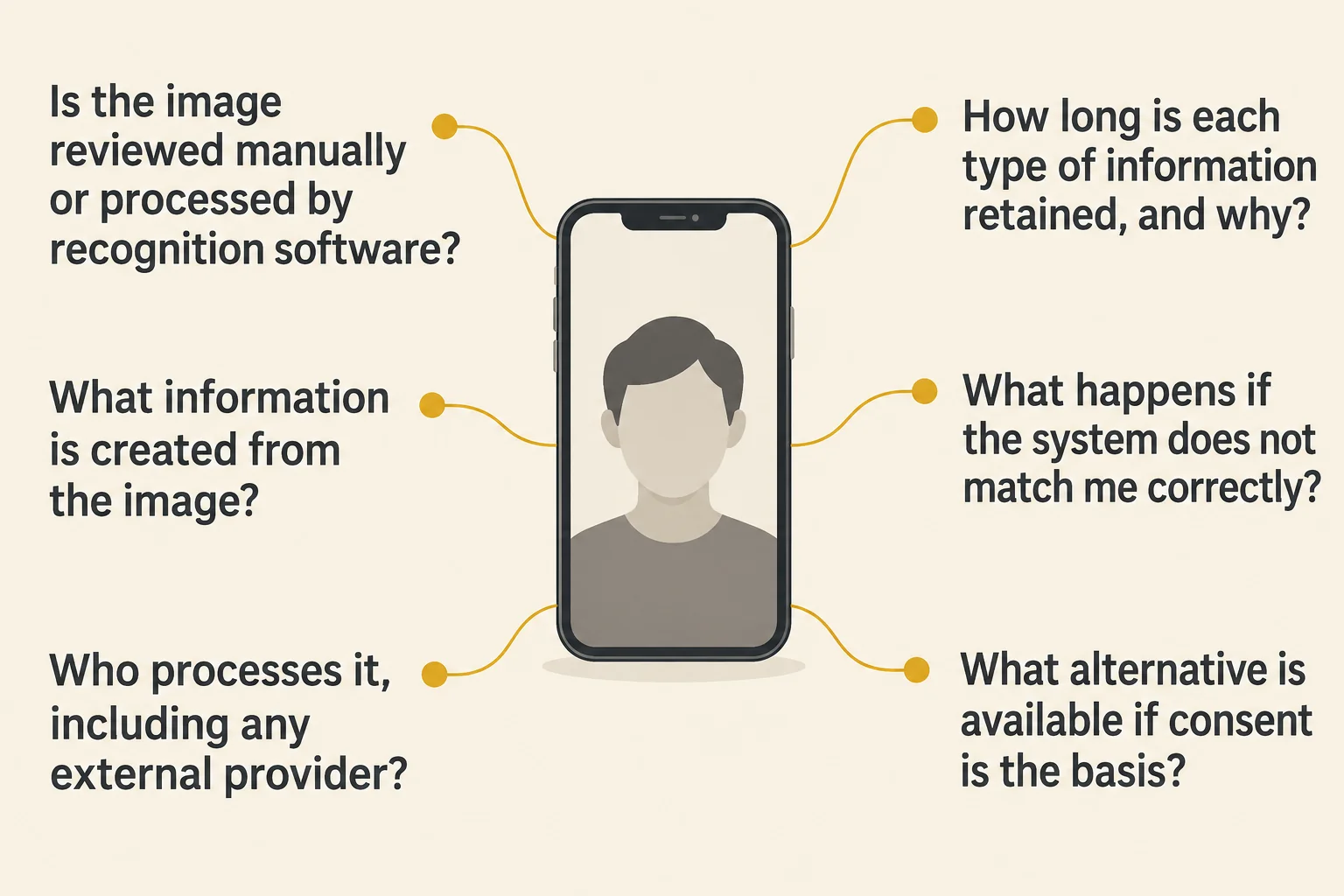
Questions to ask before submitting facial images.
Can a casino demand a selfie when you withdraw?
Timing matters. The Commission says a business cannot make withdrawal conditional on proving age and identity if it could have requested that information earlier. Its selfie guidance makes a similar point about information that could have been requested sooner.
There is an important qualification: a legal obligation may mean the business can only ask for information at that later stage. Further checks to prevent money laundering can also arise. A request during withdrawal is therefore not automatically improper, and the guidance does not guarantee immediate payment simply because you object to facial recognition.
Ask what prompted the request, why it is needed now and whether a non-biometric method can satisfy it. Keep the request and response. The Commission advises contacting the gambling company and following its complaints process if you are unhappy about the information requested. Our casino complaints and ADR guide covers the separate dispute route; ADR means alternative dispute resolution.
Comparing casinos without relying on “no verification” claims
The supplied official sources do not identify a list of casinos guaranteed never to request facial recognition. They also do not support promises of unrestricted withdrawals without identity checks. Treat “no selfie” and “no ID” as different claims, and do not assume either describes what will happen if account circumstances change.
Before opening an account or depositing, read the operator’s verification and privacy information. If it is unclear, ask about non-biometric options in writing. A clear answer about the current process is more useful than a broad promise that checks will never occur. The separate guide to fake no-verification casino warning signs discusses that advertising concern.
Frequently asked questions
Can I refuse facial recognition and still gamble?
You can raise an objection and request an alternative. Whether the account can be used depends on completing the required checks and on the circumstances of the processing. Where the organisation relies on consent, the ICO says a suitable alternative must be available. That does not remove the obligation to verify age and identity.
Does uploading a passport mean I have agreed to facial recognition?
Do not infer the processing method from the upload alone. Ask what happens to the image. Where explicit consent is relied upon, the ICO says it requires a clear statement, not merely an inference from an action.
Is there a guaranteed verification timescale?
No universal timescale is given in the Commission’s guidance. It says electronic verification may be instant, while document checks may take longer. Request an expected timescale from the operator rather than relying on a guaranteed turnaround claim.
A practical next step
If you are uncomfortable with a facial recognition request, pause and ask how the system works and which lawful alternative is available. You do not need to accept an unexplained process just to keep gambling, but you should not expect a privacy objection to waive legitimate identity checks.
Gambling is for adults aged 18 and over and carries a risk of financial harm. Do not deposit more or continue playing to resolve a verification dispute. If gambling is causing harm, stop and seek support; do not use another account or operator to get around self-exclusion.
Related guides
What to check before choosing a payment method
A practical checklist for reading deposit and withdrawal information.
Online Casino Easy Verification: A UK Guide to Faster Onboarding
Learn how online casino easy verification works in the UK, what documents you need, and how to avoid delays during identity checks.
How to assess a fast-withdrawal casino claim
An evidence checklist for payout-speed claims: licence, payment route, timing definitions, verification and a documented complaints route.