How to Withdraw Five-Figure Wins (£10,000+) Without Sending Documents
A five-figure casino withdrawal may not need fresh ID uploads, but verification still applies. Understand electronic checks, lawful requests and delayed payouts.

You may be able to withdraw a five-figure casino balance without uploading fresh identity documents if the operator has already verified you and has no further information to obtain. That is not a right to an unchecked payout. No operator can promise that a £10,000+ withdrawal will never require documents, and the amount alone does not tell you which checks remain outstanding.
If you searched for “cash out big wins no id uk casino”, the useful distinction is between no document upload and no identity verification. The first can be possible; the second is not how Gambling Commission-licensed online gambling works. This guide is for UK readers aged 18+, with regulatory explanations covering Great Britain. Do not assume identical rules apply in Northern Ireland.
When can you withdraw without sending documents?
An operator may already have checked your identity electronically. The Gambling Commission’s age, ID and financial verification guide explains that businesses can often match account details against information held by credit reference agencies and the electoral roll. If that information is insufficient, they can ask for identification documents.
For example, an electronic database match can establish identity without a passport upload. That is still verification, not an exemption from it. The Commission says online gambling businesses must verify age and identity before customers gamble.
The practical question for an existing five-figure balance is therefore: has the casino completed the checks it needs, or does it have a legitimate reason to request more information? A verified account can still face further checks when circumstances change. Nor does a document-free identity check establish how quickly the money will reach your bank.
What KYC before withdrawal actually means
The checks used to establish who you are are often called Know Your Customer, or KYC. In its current licence condition on customer identity verification, the Commission says operators must verify at least your name, address and date of birth before allowing you to gamble.
That condition also sets out an important protection: a withdrawal request must not trigger a demand for additional information that the operator could reasonably have requested earlier. This protection has an exception. The operator can seek information it must obtain at that time because of another legal obligation.
These two points belong together. A casino should not hold back a foreseeable request until you want your money, but earlier verification does not prevent every later request.
When a later request may be legitimate
The Commission’s explanation of customer identity verification gives the example of a money-laundering risk emerging later in the relationship. Anti-money laundering checks, usually shortened to AML, help businesses establish whether money is connected to crime. They may require information beyond proof of identity.
The public verification guide explains that a business may request bank statements to check that funds come from legitimate sources. It also describes selfies as a possible response to suspected identity fraud. Neither example means every large withdrawal needs the same documents. The timing and reason matter: information that could have been requested sooner should not be held back solely until withdrawal.
Ask which check remains incomplete and what information will satisfy it. A generic “KYC required” message does not, by itself, explain why an already verified customer needs to upload more material now.
Is £10,000 a special no-document withdrawal limit?
The official sources linked here do not establish a £10,000 document-free allowance. That figure describes the size of the withdrawal in this guide, not a regulatory exemption or a universal trigger for a passport request.
The Commission’s current AML threshold guidance describes a €2,000 threshold for specified casino transactions, including remote casino deposits or withdrawals, and transactions that appear linked. The currency is euros, not pounds. This is not permission for a British online casino to let someone gamble anonymously below that amount.
Checks that establish identity and assess the customer relationship are called customer due diligence, or CDD. The Commission’s current customer due diligence guidance also describes obligations when a business relationship begins, where money laundering is suspected and where earlier identification information is doubtful. A transaction threshold is not the only reason checks apply.
For online gambling, the separate identity requirement in licence condition 17.1.1 applies before you are permitted to gamble. An AML transaction threshold does not remove that licence requirement or create a document-free payout entitlement.
Do not split a payout or open additional accounts to try to avoid checks. The threshold guidance expressly covers linked transactions and asks operators to consider deliberate attempts to circumvent due diligence.
How to handle an existing £10,000+ withdrawal
The aim is to resolve any outstanding requirement without unnecessary disclosure or further gambling, not to find a workaround.
- Check the account’s verification status. Ask support whether identity verification is complete and whether any separate financial or security checks remain outstanding. Keep its written reply.
- Request the withdrawal through the operator’s official account process. Save the request reference, amount and relevant account messages. Do not assume an earlier small payout guarantees the same handling of a larger one.
- Ask for the applicable withdrawal terms. Establish whether the operator says a payment limit, processing stage, bonus condition or verification issue affects this request. This guide has not verified any individual casino’s limits or payout timetable.
- If documents are requested, ask what is needed and why now. Where identity was already checked, ask whether this is a new legal requirement or information the operator could reasonably have requested earlier.
- Confirm the secure submission route within the genuine operator account or through its official support channel. Ask whether an alternative form of evidence is acceptable if you cannot supply the requested item. Do not assume you can redact information without agreement.
If the issue concerns bonus-derived winnings rather than identity, use our guide to casino bonus wagering requirements. Those conditions are a separate question from whether a casino requested ID too late.
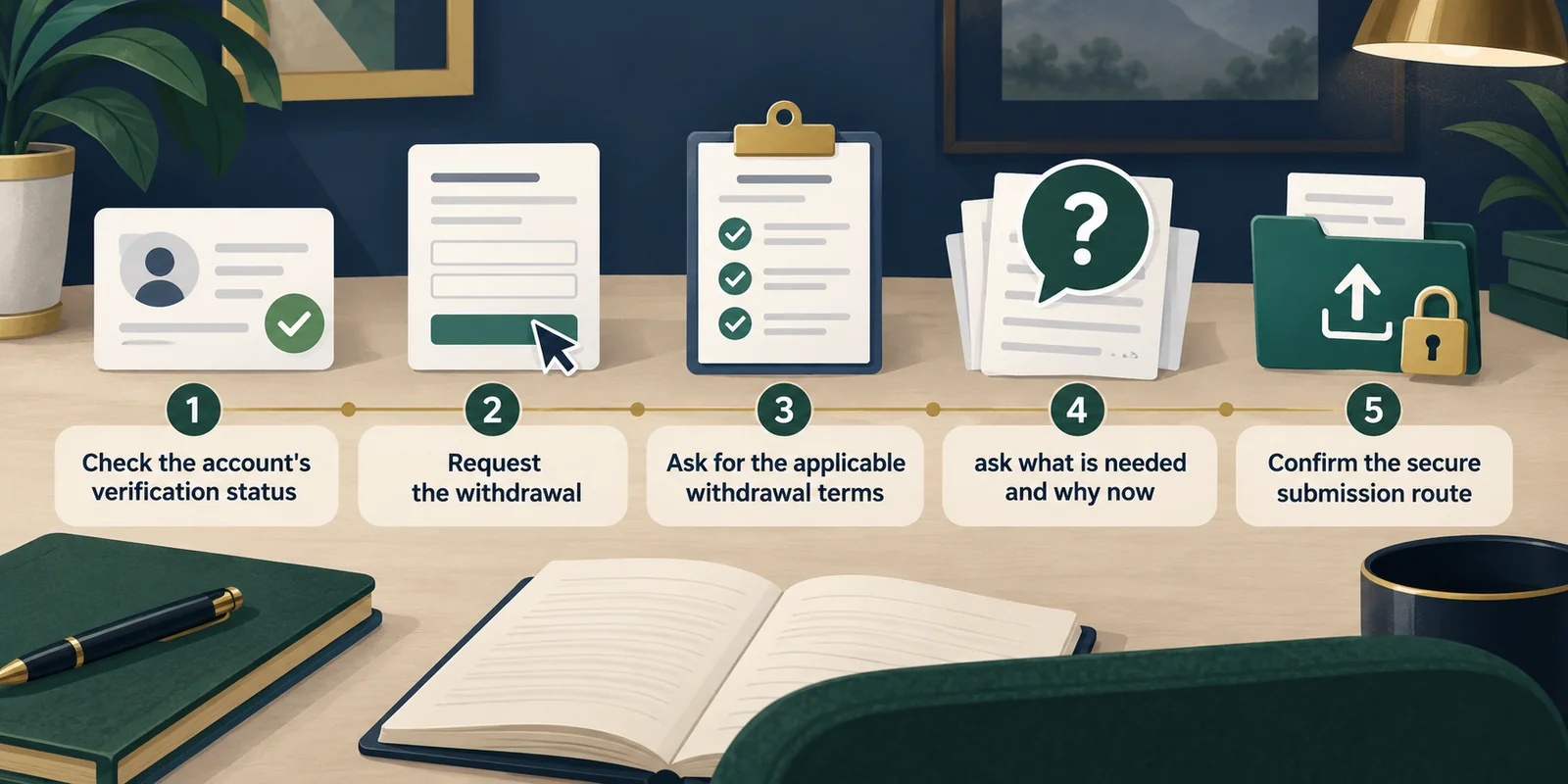
A five-step route for handling an existing £10,000+ withdrawal request.
What if the casino delays payment or threatens confiscation?
A delay and confiscation are different issues. The Commission’s identity-verification notice says operators cannot confiscate customers’ funds on the basis that they have not provided ID. It also explains that entitlement to deposited money, winnings from deposited money and qualifying bonus winnings remains subject to AML or other regulatory requirements. That is not a promise of immediate payment while a lawful check remains unresolved.
If the explanation does not address your concern, make a written complaint through the operator’s complaints process. Include the withdrawal reference, previous verification confirmation and the date the new request arrived. Ask the operator to explain why it could not reasonably have requested the information earlier and what remains necessary to resolve the withdrawal.
For the separate escalation process, see our UK casino complaints and alternative dispute resolution guide. Alternative dispute resolution, or ADR, means taking an unresolved dispute to a separate dispute-resolution body. Check the operator’s published procedure rather than assuming any particular deadline or outcome applies to your case.
Questions about five-figure payouts
Does electronic verification mean no documents ever?
No. It can remove the need for an initial ID upload when the match is sufficient. The Commission’s guidance still allows later requests where legally required, and further checks can concern the source of money rather than identity alone.
Can a casino ask for bank statements after verifying my passport?
Yes, there can be a legitimate reason. A passport establishes identity; bank statements may help establish where funds came from. The Commission identifies bank statements as one possible AML check. The operator should request needed information promptly, not simply wait until withdrawal when it could have asked earlier.
How long should the checks take?
There is no universal ID-check timescale in the Commission’s public guide. It says electronic verification may be instant, while document checks can take longer. Neither statement establishes a guaranteed payout time for a £10,000+ balance. Ask the operator for the status of your specific request.
Should I keep playing while I wait?
You do not need to keep gambling to pursue a withdrawal complaint. Further play puts the remaining balance at risk. Do not chase losses or treat a large win as income you can reproduce. If gambling is causing distress or feels difficult to control, pause and seek support through the Gambling Commission’s safer-gambling information.
For an existing payout, the useful next step is a written answer to one question: what check is outstanding, and why is it needed now? That gives you something concrete to resolve or challenge without relying on an unsupported promise of “no ID”.
Sources
Related guides
24-Hour Withdrawal Casino: A UK Player's Guide
Learn what a 24-hour withdrawal casino actually means, how to verify processing times, and how to avoid delays with KYC and payment methods.
How to assess a fast-withdrawal casino claim
An evidence checklist for payout-speed claims: licence, payment route, timing definitions, verification and a documented complaints route.
Best High Roller Casino Sites: A UK Player's Guide
Looking for the best high roller casino sites? Discover what VIP players need, from higher limits to faster withdrawals, in this practical UK guide.