Exclusive VIP Tournaments: Are No-Rakeback Caps Guaranteed?
How to assess exclusive VIP tournament invitations, separate rakeback claims from prize terms, and understand the safeguards behind VIP schemes.

What does a VIP tournament invitation actually promise?
An invitation to an exclusive tournament does not establish that its rewards are uncapped or that you can withdraw a prize without conditions. If you are searching for “vip exclusive high stakes tournaments uk”, start with the written rules for the specific event, not the VIP label.
The phrase “Exclusive VIP Tournaments with Guaranteed No-Rakeback Caps” needs particular care. Neither of the Gambling Commission sources cited here confirms an offer with that name, a no-cap guarantee or any current tournament schedule. They explain safeguards for high-value customer schemes, not the commercial terms of a particular event. Without an identified operator and its official terms and conditions, the claimed guarantee remains unconfirmed.
This guide is for adults aged 18 and over comparing casino information. It explains what to look for rather than recommending a tournament or encouraging higher spending to secure an invitation.
What could “No-Rakeback Caps” mean?
Rake is a fee charged by a poker operator, taken from play or associated with entry to a tournament. Rakeback means returning a portion of qualifying fees to the player. It is not the same thing as a tournament prize or a refund of gambling losses.
“No-Rakeback Caps” is ambiguous: it could be intended to describe rakeback without an upper limit, but the wording alone does not establish that interpretation. It also does not explain which fees qualify, how the return is calculated or what conditions apply. Neither supplied regulatory source defines the phrase.
Separate the reward limit from other restrictions
Even if official terms expressly say that rakeback has no maximum amount, that statement would address only the specified reward limit. It would not, by itself, confirm unlimited prizes, unrestricted withdrawals or the absence of entry fees. Each of those needs its own answer in the event or account terms.
Ask for a written explanation of what is uncapped and what remains restricted. If the invitation uses the phrase but the formal rules do not explain it, there is no sound basis for comparing it as a confirmed benefit.
What the Gambling Commission says about VIP schemes
The Commission’s high-value customer industry guidance says there is no single definition of a high-value customer, also called a VIP. Operators define the category in relation to their business and customer base. A VIP label therefore does not tell you a standard entry threshold or a uniform set of benefits.
The guidance covers tailored or personalised incentives linked to high spending or frequent play. Its examples include invitations to events, dedicated account management and individualised bonuses or gifts. An invitation linked to a personalised VIP relationship should consequently be considered in that context, rather than treated as an exemption from player protection.
There is a useful distinction here: the guidance says high-value prizes in promotions available to the wider customer base are not, on that basis alone, within its scope. A large advertised prize does not automatically make an event a high-value customer scheme.
VIP status does not remove checks
The guidance requires operators to apply player protection controls, affordability checks and due diligence at appropriate stages or in response to specific concerns. It also says operators that cannot meet the minimum expectations should not operate high-value customer incentive schemes.
The Commission’s page on incentives for high-value customers describes an industry draft code with commitments to customer assessments before incentives, ongoing checks and welfare taking priority over commercial pressure. Those assessments include whether spending is sustainable and identity checks, often called Know Your Customer checks.
That page also describes restricting access for people aged 18 to 24. It is an account of industry commitments, not a named tournament’s eligibility policy. Being over 18 should not be read as automatic eligibility for a VIP programme.
How to compare official tournament terms
Use the rules for the actual event alongside the VIP programme and account terms. A promotional headline is not enough to resolve a missing condition.
| Question | What the written terms need to clarify |
|---|---|
| Who can enter? | Invitation requirements, age and location restrictions, and any account checks. |
| What does entry cost? | The buy-in, any separate fee, and whether repeat entry or additional purchases are permitted. |
| How is the result decided? | The game, scoring method, event period and treatment of ties. |
| What does a winner receive? | Whether the prize is cash, bonus credit or another reward, and any conditions attached. |
| What does rakeback cover? | Eligible fees, calculation method, payment timing, exclusions and any stated cap. |
| Can rewards be withdrawn? | Any play-through requirements, conversion limits or withdrawal conditions applying to that reward. |
| What happens if the event changes? | Cancellation provisions, refund terms and the route for raising a dispute. |
For any reward requiring further play before withdrawal, our guide to casino bonus wagering requirements explains the terminology. Do not assume a cash prize and a bonus-credit prize have identical conditions.
Check the specific date, not an assumed daily schedule
Neither cited source lists daily VIP tournaments, confirms available places or supplies an operator’s event terms. A recurring promotion should still have rules identifying the relevant event period. Check that the invitation, schedule and linked conditions refer to the same event before relying on them.
There is no verified operator offer or daily tournament link to recommend from this evidence. The absence of those details is a reason to withhold judgement, not to fill in the gaps with an attractive-looking promise.
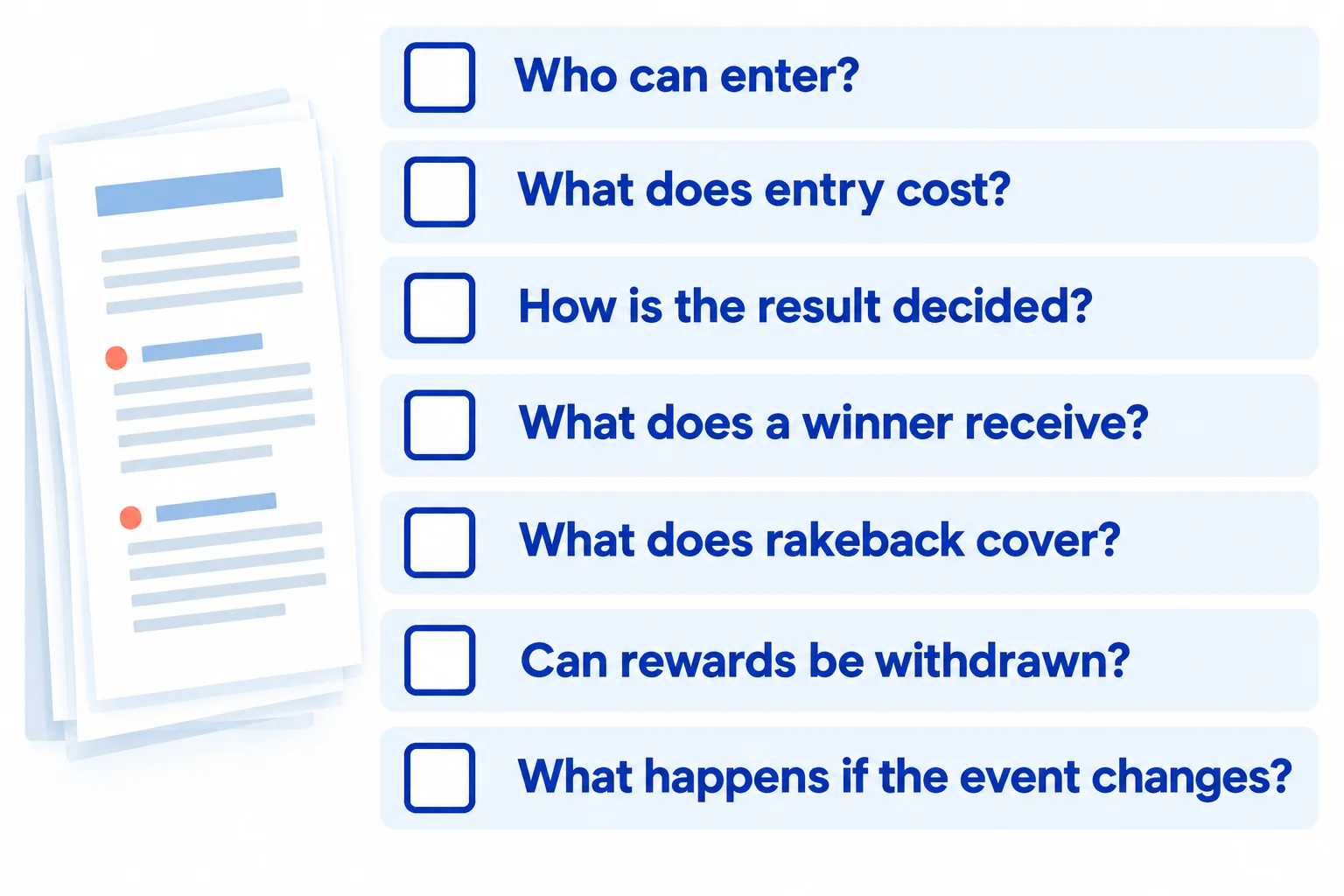
Seven questions to check in the written tournament terms.
Keep the invitation separate from your spending decision
The Commission explains that its casework found VIP incentives could obstruct the identification of people experiencing gambling harm and, in some cases, encourage harmful play. Personal attention from a host is not evidence that further gambling is affordable or safe for you.
Do not increase stakes, chase losses or play more frequently to obtain or retain VIP status. Money needed for everyday essentials should not fund entry, and a reward cannot guarantee recovery of what you spend. You can decline an invitation even when you meet its eligibility conditions.
If gambling is causing harm, stop playing and seek support. The Commission’s linked player page includes help and support information. If the issue is an unresolved operator dispute, our casino complaints and ADR guide explains complaints and alternative dispute resolution, a route for seeking an independent resolution.
Is a guaranteed no-cap offer established here?
No. The available official evidence supports an explanation of VIP safeguards, not the advertised no-rakeback-cap promise. No operator-specific entry price, prize, rakeback rate or withdrawal condition has been confirmed.
For a meaningful comparison, obtain the named event’s official rules and a clear written definition of the claimed cap exemption. Until those agree, treat “guaranteed” as unsubstantiated promotional wording, not a reason to enter.
Related guides
Casino customer funds protection: what the ratings mean
A separate account is not enough to protect a casino balance if the business fails. Learn how to read the rating, its supporting arrangements and reminders.
High Limit Sports Betting & Casino Hybrids Outside GamStop for British Punters
Understand what high limits mean across sportsbooks and casinos, why British licensing matters, and what the official sources do not establish.
Bankroll Allocation at High Limit Casinos: Limits for Big Bets
A practical guide to separating essential money from a gambling budget, setting loss limits and understanding why high stakes do not change casino odds.